The Ultimate Guide to Choosing the Perfect Photo for Your Custom Pencil Portrait
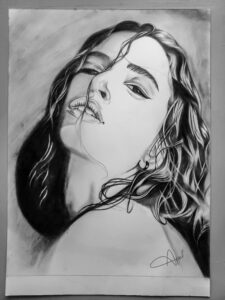
When you decide to celebrate a loved one, a cherished pet, or a precious memory with a custom pencil portrait, you are embarking on a deeply personal artistic journey. A hand-drawn portrait is a timeless piece of art that captures the essence and soul of the subject in a way a photograph seldom can.
However, the quality of the final artwork is intrinsically linked to the reference photo you provide. As an artist specializing in fine detail and accurate likeness, I can only draw what I can see.
This comprehensive guide will walk you through every critical aspect of selecting or taking the ideal photograph to ensure your commissioning portrait experience results in a stunning piece of heirloom quality.
I. The Golden Rule: Quality Over Everything Else
If there is one non-negotiable factor in ordering a custom drawing, it is the quality of the reference photo. A fuzzy, dark, or tiny photo will always limit the detail I can achieve, no matter how skilled I am.
1. Resolution and Size: Seeing the Detail
The image should be of the highest possible resolution and size.
- Avoid Screenshots: Never use a screenshot from a phone or computer, as this significantly degrades the image quality. Always send the original file.
- Optimal File Size: Look for a photo with a large file size (ideally 1MB or more) and high dimensions (2000 pixels on the long side or more). A large file allows me to zoom in without the image breaking up into noticeable pixels.
- The “Eye Test”: Zoom in on the photo on your computer screen. If you can clearly see the catchlight in the eyes, individual strands of hair, and the texture of the skin or fur, the photo is likely good enough for a detailed custom pencil portrait. If the eyes are blurry or featureless, the final drawing will be too.
2. Clarity and Focus: Sharpness is Key
A sharp image ensures an accurate likeness.
- Pinpoint Focus: The subject’s face (especially the eyes) must be in sharp focus. If the subject is slightly blurred due to camera shake or shallow focus, the portrait will inevitably lack clarity.
- Avoid “Soft Focus”: While some portrait photography uses a very soft focus, a highly detailed custom drawing requires clear, crisp lines for the best result.
II. Mastering the Light: The Role of Illumination
Lighting is perhaps the second most critical factor after resolution. It defines the form, mood, and dimensionality of the subject. A well-lit photo provides necessary shadows and highlights that bring a commissioning portrait to life.
1. The Power of Natural Light
Natural, even lighting is almost always superior to artificial light for a custom pencil portrait.
- Soft, Diffused Light: The best light is soft and diffused, such as light from a large window or open shade outdoors. This type of light minimizes harsh shadows and shows contours beautifully.
- Tip: Take the photo facing a window during the daytime. The window should be behind the camera, not the subject.
- Golden Hour: The hour just after sunrise or before sunset provides warm, flattering light that enhances skin tones and creates soft, appealing shadows.
2. What to Avoid in Lighting
Certain lighting conditions can be a disaster for a custom drawing:
3. Highlights and Shadows: The Essence of Form
The beauty of a hand-drawn custom pencil portrait lies in the rendering of light and shadow (known as chiaroscuro).
- Look for a photo where the light clearly defines the contours of the face. A completely flat, evenly lit photo results in a flatter drawing.
- Avoid photos where the light completely “blows out” (overexposes) the subject’s features. If the light areas are pure white with no detail, I will have no reference to draw.
III. Composition and Expression: Capturing the Soul
A custom drawing is about more than just technique; it’s about capturing a moment, emotion, and personality.
1. The Ideal Angle and View
Consider the most appealing angle that best represents your subject.
- Straight-On or 3/4 View: These are the most common and effective views for a custom pencil portrait. The 3/4 angle (where the subject is slightly turned away from the camera) adds depth and dimension.
- Eyes are the Focal Point: The eyes are the most important feature. Choose a photo where the eyes are visible, clear, and expressive. The expression in the eyes will be the heart and soul of your custom drawing.
- Avoid Extreme Angles: Photos taken from high above or very low (looking up) can distort facial proportions, making it challenging to achieve an accurate likeness in a classical style.
2. Expression and Personality
The expression you choose will be preserved forever in your commissioning portrait.
- Genuine Smiles: Choose a natural, genuine smile rather than a forced grimace. Natural expressions translate best into the subtle graphite texture of a custom pencil portrait.
- Pet Personalities: For pet portraits, choose a photo that captures their typical “look”—their mischievous grin, their focused gaze, or their relaxed, happy pant.
IV. Technical Considerations for Combining Photos
Many clients wish to combine subjects from multiple photos or add a subject who is no longer with us. This is possible, but it requires careful planning.
1. Consistency in Lighting
When combining two subjects into a single custom drawing, their reference photos must have very similar lighting and angles.
- Scenario 1 (Good): Combining a child taken under a window with a parent taken under a different window. The light direction and intensity are consistent.
- Scenario 2 (Bad): Combining a pet taken in harsh, midday sun with a child taken in a dark room with a flash. The resulting drawing will look unnatural and “stitched together.”
2. Proportional Scaling
When commissioning portrait work from different photos, I must be able to accurately gauge the proportional size of the heads/bodies relative to each other.
- If possible, include an object of known size in both photos to help me maintain scale (though this is often impossible).
- Be clear about the relative size you envision (e.g., “I want the dog to sit by his feet, not his knees”).
V. Checklist for Your Perfect Custom Pencil Portrait Photo
Before sending your photo for your custom pencil portrait order, review this final checklist. The best single photo usually meets all criteria.
Conclusion: Start Your Commissioning Portrait Journey
Selecting the right photo is the first, and most crucial, step in creating your extraordinary custom pencil portrait or custom drawing. It sets the foundation for a work of art that will be cherished for generations.
I encourage you to gather your favorite photos and use this guide to help you find the absolute best one. If you are unsure which photo to choose, please do not hesitate to send me 3–5 of your top candidates! I am always happy to provide a professional assessment and recommendation to ensure your final piece is nothing short of perfect.
Ready to transform your memory into a hand-drawn masterpiece?